
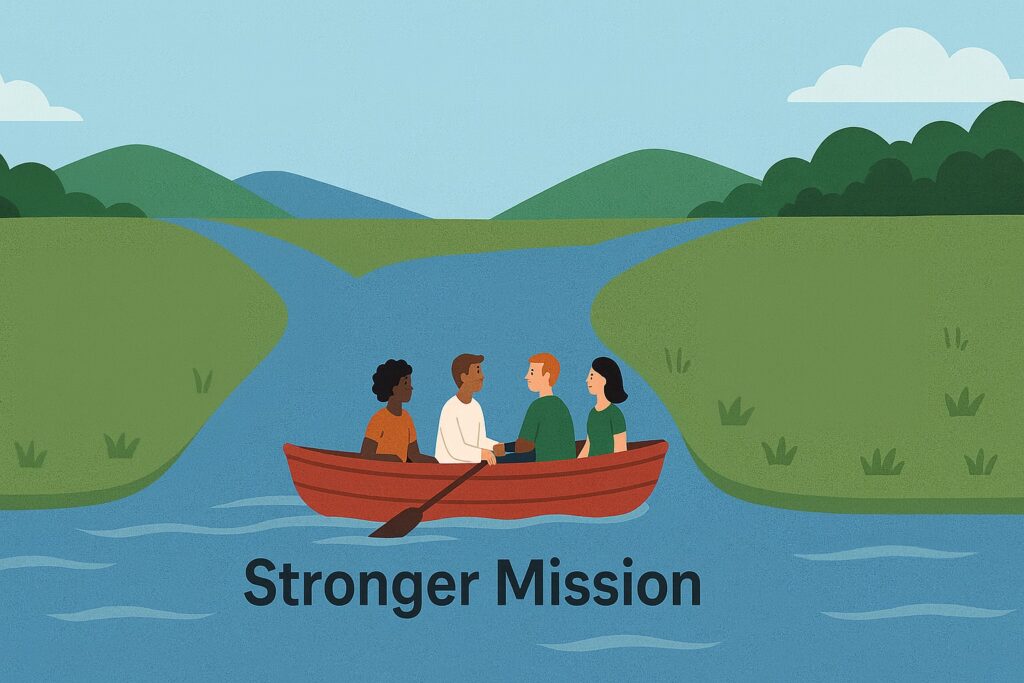
In the nonprofit sector, there are few words that spark more tension than “merger.” For many boards and staff, it conjures fears of losing identity, control, or cherished traditions. Yet, increasingly, at Interim Executive Solutions we are finding that mergers are proving to be not just survival strategies, but pathways to mission sustainability, stronger services, and healthier organizations and we have deep experience leading nonprofits through that process when appropriate.
Unlike the corporate world, where mergers are often about market share or cutting costs, nonprofit mergers are—at their best—about mission. They bring together organizations with complementary strengths, allowing them to serve clients more effectively, appeal to funders with greater credibility, and provide staff with a more stable environment. When done thoughtfully, mergers, the ultimate form of partnership, can unlock efficiencies without diluting purpose.
What Makes a Merger Work
Keys to success begin with what each partner brings to the table. That may include tangible assets such as facilities, technology, or funding streams. Just as important, however, are the less visible contributions: client relationships, community goodwill, specialized staff expertise, or trusted partnerships. When both organizations bring meaningful assets, there’s a sense of balance that fuels trust and collaboration.
Equally vital is a commitment to protect and sustain both missions during the early stages of the merger. It takes time for organizations to learn one another’s cultures and operating rhythms. A common best practice is to establish a combined board with representation from both entities. This signals continuity to staff, funders, and clients, and creates a structure for shared governance. Representation can also temper suspicion among staff, who may worry that their organization’s voice will be silenced in the new arrangement.
Leadership is the final, crucial ingredient. The leaders who remain must intentionally engage colleagues from the other organization, ensuring they feel heard, valued, and part of the future. Without this deliberate inclusion, a merger risks being experienced as a takeover. With it, the new organization can weave together the best of both legacies.
Benefits for Stakeholders
For Clients:
The most immediate benefit is access to more comprehensive services. Instead of navigating multiple agencies, clients may find housing, healthcare, education, or workforce development under one roof. Service continuity is often stronger, and gaps that existed before can be filled. For example, the merger of Pathlight and ServiceNet broadened the continuum of care for people with developmental disabilities in Massachusetts, allowing individuals and families to access a more complete range of supports.
For Funders:
Funders value efficiency, stability, and impact. When nonprofits merge, they reduce duplication of overhead while expanding program capacity. This makes it easier for funders to justify larger, multi-year grants. A merged organization is often seen as a lower-risk investment because it has a broader base of leadership, staff, and financial resources. In global work, the merger of Search for Common Ground with the Preemptive Love Coalition reassured funders that the combined network could pursue peace-building efforts with greater reach and credibility.
For Staff:
When managed well, a merger can offer staff stronger infrastructure, new professional opportunities, and a more resilient workplace. Teams benefit from additional colleagues, better systems, and the sense of being part of an organization with a stronger long-term outlook. Staff may also enjoy expanded career pathways that weren’t possible in smaller, stand-alone nonprofits.
Challenges Along the Way
While the benefits are real, mergers also come with challenges that need deliberate attention.
Identity Concerns: Staff and volunteers often fear that their history, culture, or approach will be erased. This can create resistance, mistrust, or even attrition if not addressed. Leaders must honor the legacies of both organizations while steadily building a new, shared identity.
Role Consolidation: One of the realities of merging is that certain functions—finance, HR, communications, development—don’t need to be duplicated. This often leads to consolidation of roles, which can mean layoffs or reassignments. These changes can cause anxiety across the workforce. The organizations that manage this well are those that are transparent about decision-making processes, provide advance notice, and offer support—whether through severance, career counseling, or redeployment within the new entity.
Governance Complexity: Merging boards can be unwieldy at first, as cultures, priorities, and personalities adjust. Without careful facilitation, meetings can feel like “us versus them.” Over time, though, a combined board brings valuable diversity of thought and broader networks that can strengthen the organization and may lead to an update to the by-laws.
Cultural Differences: Even organizations serving similar clients can have very different internal cultures. One may be highly structured, while the other operates informally. One may prioritize rapid innovation, while the other emphasizes cautious, compliance-driven approaches. Leaders must anticipate these tensions and create intentional opportunities for staff to learn about and respect one another’s approaches.
It is important to note that, from the day discussions begin, the entire process may take 12-18 months to complete and each organization may need to stay sustainable through that period on its own. Moreover, the work does not end with the merger. Post-merger integration and capacity building requires the same energy and commitment as the merger process itself.
In short, there needs to be a long-haul commitment for a merger to be successful and there needs to be support and resources to reduce the fatigue.
The Transparency Imperative
The way a merger is managed makes all the difference. Transparency is essential—especially around difficult topics like job consolidation or program realignment. Staff need to know not only what decisions were made, but how and why. When leaders explain the criteria, acknowledge the trade-offs, and support those most affected, they build trust even in the midst of disruption.
Listening is equally important. Providing forums where staff can ask questions, express concerns, and suggest ideas ensures that everyone feels valued in the new organization. Engagement helps turn skepticism into buy-in.