
Last time, we argued that it’s time to stop calling these organizations nonprofits and start calling them what they really are — social impact enterprises. The distinction isn’t just semantic. It changes how we think, how we govern, and ultimately how we measure success.
If we accept that these organizations are, in fact, businesses with a social mission, then the role of their boards becomes clearer and more consequential. Boards must do more than preserve the status quo or ensure compliance. They must understand, define, and drive the impact the organization seeks to achieve — and make sure the enterprise is built to sustain that impact over time.
Define the Desired Impact
Every social impact enterprise starts with a mission, but too often that mission statement is broad, static, and unmeasured. A board’s first responsibility is to help leadership clarify the real-world difference the organization intends to make.
What does success look like in tangible terms? Who is better off as a result of your work, and how can you tell? Is the organization addressing an urgent need, or one that’s already being met in other ways?
A clear, shared definition of impact becomes the North Star — guiding resource allocation, program design, partnerships, and even decisions about when to sunset initiatives that no longer serve the mission.
Validate the Need and the Support
Even the most passionate missions need validation. Boards should ensure that the organization’s work aligns with a verified and continuing community need — and that there is adequate support (financial, political, and emotional) to sustain it.
That means looking beyond anecdotal evidence. What does the data say? Are there emerging trends that might shift the need or reshape how it’s best met? Are funders and donors still committed to this area of work, or are priorities changing?
An honest assessment can help a board determine whether to stay the course, adapt, or even collaborate or merge with others to maintain relevance and reach.
Understand the Competitive Landscape
Yes, competition exists in the nonprofit sector, even if it’s uncomfortable to say out loud. Organizations compete for funding, talent, visibility, and community trust. A strong board understands this landscape.
Who else is working in the same space? What makes your organization’s approach distinctive or more effective? Are there opportunities to partner or cross-leverage resources rather than duplicate effort?
In the business world, market intelligence drives strategy. In social impact work, it’s just as critical — because redundancy drains limited resources and confuses the very people you’re trying to serve.
Measure and Communicate Impact
Impact without measurement is just good intention. Boards should ensure that meaningful metrics are in place — not just activity counts (“we served 500 families”) but outcomes that show progress toward the mission (“500 families moved from temporary shelter to permanent housing within 6 months”).
Once measured, those results must be communicated effectively. Data tells part of the story; human experience tells the rest. A compelling narrative that blends both inspires donors, reassures regulators, energizes staff, and deepens community trust.
Storytelling isn’t just a marketing function — it’s a strategic one. When an organization can clearly show why its work matters and what difference it’s making, it creates value that reinforces financial sustainability. Funders want to invest in proven impact, not just good intentions.
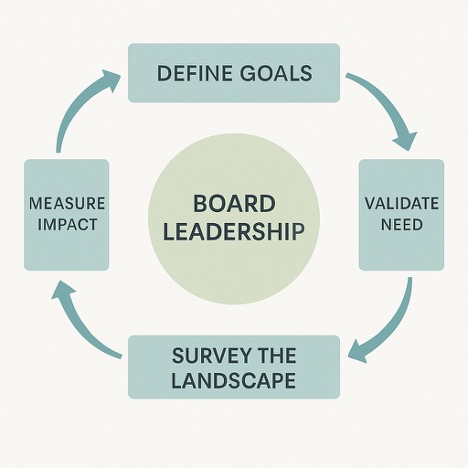
The Board’s Leadership Role
Boards of social impact enterprises need to think like investors in outcomes, not just overseers of operations. They should:
-
- Clarify impact goals and ensure alignment between mission, programs, and resources.
- Validate need and market fit — confirm that the organization is meeting a real demand and that support exists for the work.
- Scan the landscape for partnerships, overlaps, and opportunities for greater leverage.
- Measure and communicate results to sustain engagement and attract ongoing investment.
In short, governance must evolve from compliance to strategic stewardship of impact.
A New Mindset for a New Era
Rethinking nonprofits as social impact enterprises challenges us to adopt a mindset of accountability, adaptability, and ambition. It reminds boards and leaders alike that purpose and performance are not at odds — they are inseparable.
Success, in this light, means more than surviving the next fiscal year. It means building an organization that can demonstrate its value, inspire confidence, and sustain its mission over time.
Because when we start treating social impact as a discipline — not a side effect — we give our missions the structure, credibility, and resilience they deserve.