
Leadership transitions can feel like being at a crossroads. When an executive director steps away, staff members often face uncertainty about their roles, increased workloads, and concerns about the organization’s future.
This uncertainty often breeds anxiety. Studies show that about 40% of employees feel anxious about organizational changes, making it the most common reaction during work transitions. If poorly managed, these emotions can affect morale and cause even the most dedicated team members to disengage. During these crucial moments, protecting staff engagement becomes essential to maintaining the nonprofit’s mission and operational stability.
Understanding Staff Stress Points During Transitions
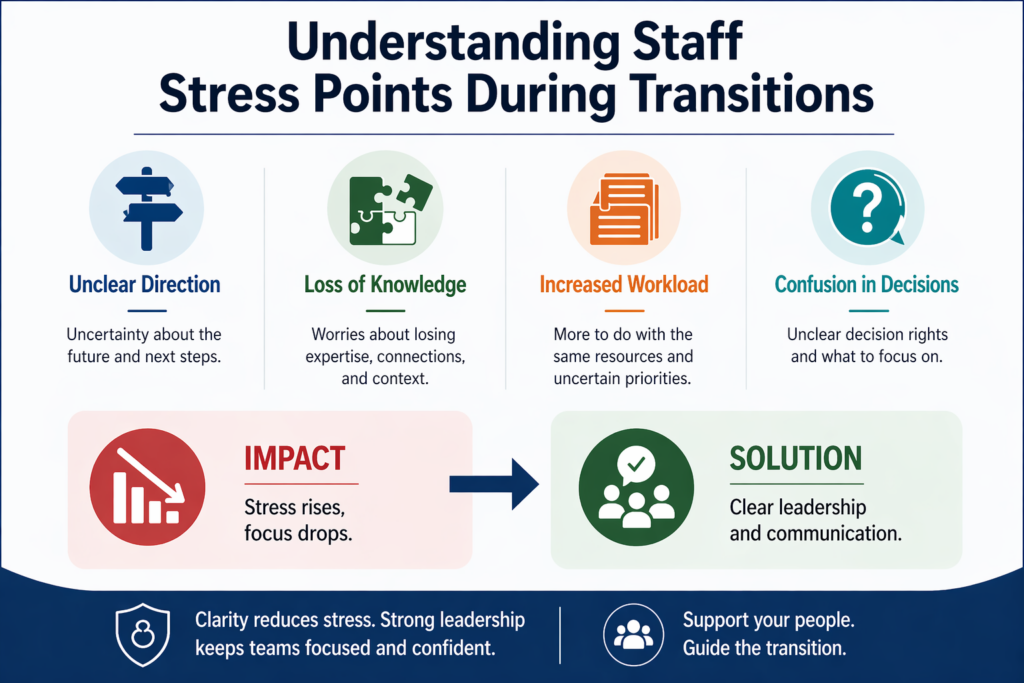
The departure of a key leader creates evident pressure points for staff members. Uncertainty about the organization’s direction often surfaces first, especially when team members don’t understand the transition plan.
Staff may also be concerned about losing institutional knowledge and established ties. When a trusted leader leaves, the connections, context, and understanding they provided may feel invaluable, leaving team members worried about continuity.
Workload difficulties emerge quickly as well. Although day-to-day operations continue throughout the transition period, staff may feel unsure about decision-making authority and where to focus their efforts. This is where experienced guidance is critical for retaining clarity and avoiding burnout.
Clear Communication and Workload Balance
Effective communication during a nonprofit transition necessitates transparency and consistency. With interim leaders in place, organizations can maintain proper communication channels and ensure staff and board members receive regular updates throughout the transition period.
Organizations can follow several key practices to achieve strong staff engagement, including:
-
- Establish a communication timeline: Share updates regularly, even if there is no important news to announce.
- Create multiple feedback channels: Ensure staff have various ways to ask questions or express their concerns.
- Be honest about unknowns: Acknowledge uncertainty while outlining how decisions will be made.
- Involve staff appropriately: Gather feedback on organizational needs so staff feel invested in the outcome.
Beyond communication, keeping workload balance is critical for team morale. Through open communication channels, interim leaders can work with staff members to assess priorities, identifying which tasks need immediate action and which can wait. This strategic allocation of responsibilities ensures that no one is overwhelmed, burnout is avoided, and professional development opportunities are identified.
How Interim Leadership Supports Team Morale

Interim leaders play an essential role in protecting staff engagement during transitions. While they provide temporary guidance and stability as the organization prepares for its next permanent leader, their impact on team morale goes beyond simply filling a vacancy.
What makes them particularly effective is their consistent presence and accessibility, ensuring staff and the board always have someone to consult for guidance and decision-making. These experts also listen to and learn from existing teams, thereby validating institutional knowledge and reinforcing that staff contributions matter.
Experienced interim leadership helps nonprofits maintain stability throughout transitions by supporting and assisting staff, retaining key personnel, and ensuring program delivery continues while organizations prepare for permanent leadership. This stability often shows up in everyday operations, such as:
-
- Fundraising campaigns staying on track and meeting critical deadlines
- Grant reporting and donor communications continuing without disruption
- Community programs and services run according to planned timelines
- Volunteers staying organized and supported in their tasks
- Stakeholders and partnerships remaining active and responsive
- Fundraising campaigns staying on track and meeting critical deadlines
Organizations that leverage interim leadership during transitions focus on improving staff morale and retaining key personnel because stable leadership, even temporary, provides the organizational support that keeps teams engaged and committed to the mission despite leadership changes.
Moving Forward with Confidence
Leadership shifts don’t have to disrupt your team. When organizations can identify stress points early, communicate clearly and consistently, strategically manage workloads, and consider interim leadership support, they protect staff engagement and mission continuity, which benefits staff, board members, and the communities they serve.
At Interim Executive Solutions (IES), we specialize in providing experienced interim leaders who understand the importance of protecting staff engagement during organizational transitions. Our interim leaders collaborate with your staff and Board to retain stability, boost morale, and ensure seamless operations as your organization plans for the future.
To learn more about our services, visit our official website or contact our 24/7 support at in**@**********ec.org or 1-855-INT-EXEC (1-855-468-3932).